

Brand Metrics That Matter: Signal Over Vanity
- Technical Development
- Feb 2
- 3 min read

More dashboards won’t fix a direction problem. What moves brands forward is choosing a few brand metrics that matter - the ones that signal progress and shape decisions. The rest is vanity: interesting, sometimes flattering, rarely useful. Here’s how to separate signal from noise and turn measurement into momentum.

Quality Over Quantity: Brand Metrics That Matter
Modern stacks make it effortless to collect everything and prioritise nothing. Teams chase spikes, screenshots, and weekly “wins” - but struggle to show what actually changed in the business.
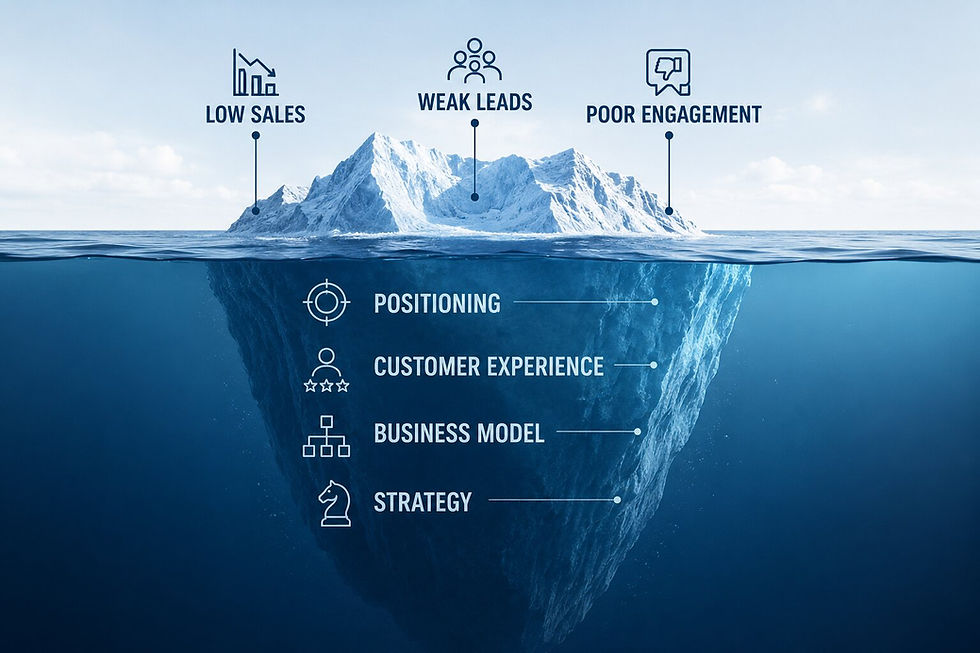
The issue isn’t the data. It’s the intent. Metrics should express your brand strategy, not distract from it. When your numbers ladder back to your narrative and your goals, you know exactly which levers to pull next.
Start with the brand promise
Your promise defines what you measure. If you can’t state your promise in one clear line, fix that first - metrics can’t rescue unclear messaging. Once your promise is tight, anchor it with three Ps:
Promise: the outcome you exist to deliver.
Proof: the behaviours or results that show the promise is real.
Pace: the rhythm at which you show up with value.
Now your measurement map has a spine. You’re tracking evidence that your story is landing, converting, and compounding - not just collecting numbers for decoration.
Signal vs. vanity: a practical filter
Use this filter whenever a metric pops up in your dashboard:
Signal metrics (keep):
Tied directly to qualified attention, consideration, conversion, or trust.
Trigger a clear decision when they move.
Stay consistent enough for month-over-month comparison.
Vanity metrics (park):
Fluctuate with algorithms more than with your actions.
Look great in screenshots, but do nothing for priorities.
Can’t be improved without changing your entire brand or product.
If a metric cannot change next week’s plan, it’s not a priority metric.
Map the journey in four stages
Choose a small set of indicators for each stage, so teams always know where to focus:
Discover (qualified visibility) Branded search interest, profile/landing visits, completion of "about us" content. Are the right people finding our story?
Consider (proof + depth) Time on core pages, scroll depth, case-style content engagement, FAQs. Are people engaging with the reasons to believe?
Decide (conversion quality), Demo requests, contact form quality, proposal acceptance. Is interest turning intoa serious conversation?
Trust (reputation momentum) Review velocity, sentiment, testimonial usage, narrative share. Is the market reinforcing our story?
You’re not tracking everything - just the moments that move the business.
Build decision triggers - not just dashboards
Metrics matter when they flip a switch. Define thresholds that automatically change your actions:
“If completion drops below X%, rewrite the headline + move proof higher.”
“If branded queries rise Y% for 2 months, expand the topic cluster.”
“If reviews dip below Z, pause promotion and activate the ORM playbook.”
Clear triggers = shorter meetings + sharper output.

Connect strategy, story, and systems
Signal metrics work when execution is integrated:
Strategy: one narrative and positioning that everyone can repeat.
Story: consistent voice + visuals across web, profiles, and decks.
Systems: a connected stack with automation, analytics, templates, and training.
If any leg is missing, metrics turn into “report theatre.” With all three aligned, insights roll straight into action.
Make the metric move: focused plays
Visibility stalls → Strengthen About/Services pages, tighten bios, publish branded-intent assets.
Weak consideration → Add case narratives, walkthroughs, structured FAQs.
Conversion quality drops → Audit message drift; unify forms, decks, and emails.
Trust slipping → Treat ORM as part of the system; align responses and ship reputation assets.
Each action changes the system - not just a page - so improvement compounds.
Cadence beats bursts
Momentum comes from a monthly rhythm you can sustain:
Plan → Ship → Measure → Decide → Train
Quarterly, refine the broader strategy. Annually, run a deeper brand audit to keep the system honest.
Where The QWERTY Ink fits
We connect Integrated Brand Strategy, creative storytelling, Digital Integration, and Business Data Interpretation so your metrics don’t sit in a silo. They guide the story you tell, the systems you use, and the speed at which you ship.
Ready to trade screenshots for results? Let’s build a signal-driven system that compounds.


Comments