

Pricing Strategy That Makes the Value Clear
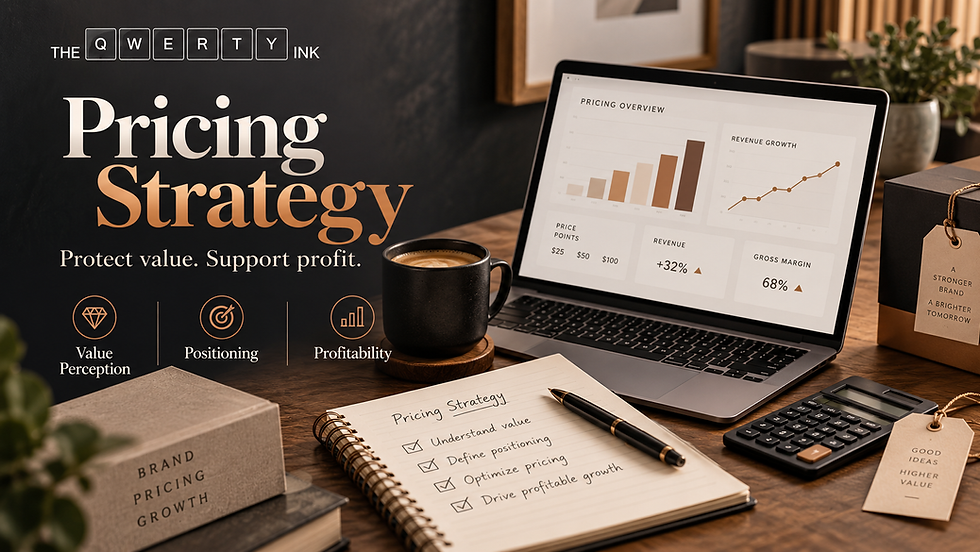
A price does more than tell customers how much something costs.
It can influence how they judge quality, compare alternatives, and decide whether an offer feels worth considering.
That is why Pricing Strategy should not begin with a calculator alone.
Businesses also need to understand what customers value, how competitors are positioned, what the market expects, and what the price communicates about the brand.
Getting the number right is partly about margins. Getting the meaning behind that number right is strategy.
The Cheapest Option Does Not Always Feel Like the Best Deal
Lowering prices can attract attention, but it can also change how customers perceive an offer. A premium service priced far below its competitors may create doubt rather than excitement.
On the other hand, a high price without a clear reason behind it can make customers question whether the value is really there.
A strong Pricing Strategy considers the relationship between:
Customer value – What is the solution genuinely worth to the buyer?
Brand positioning – What does the price communicate about the business?
Competition – What alternatives can customers choose?
Costs and margins – Can the price support sustainable operations?
Market expectations – What price range already feels familiar to the audience?
Price works best when these factors support one another.
How The QWERTY Ink Looks Beyond the Price Tag
At The QWERTY Ink, pricing decisions can be viewed as part of the wider business and brand picture rather than as an isolated number.
A Pricing Strategy becomes clearer when businesses examine factors such as:
Who the intended customer is
How the offer is positioned
What makes it different from competing alternatives
Which benefits customers value most
Whether the current price supports the desired brand perception
How pricing contributes to wider business objectives
The objective is not simply to make something cheaper or more expensive.
It is to make sure the price makes sense alongside the value, positioning, audience, and direction of the business.

Sometimes the Problem Is Not the Price
When sales slow down, price is often one of the first things businesses consider changing. But the real issue may be somewhere else.
Customers may not understand the value, the offer may be poorly positioned, the audience may be wrong, or the buying experience may create friction.
Before discounting, businesses should understand what is actually stopping the customer from buying. Changing the price without identifying the real problem can reduce margins without solving anything.
Final Thoughts
A good Pricing Strategy is not about finding the lowest number customers will accept or the highest number a business can charge.
It is about finding a price that makes sense for the customer, supports the business, and reflects the value being offered.
Make every number support a clearer business direction. Explore The QWERTY Ink and build a strategy around value, positioning, and sustainable growth.


Comments